
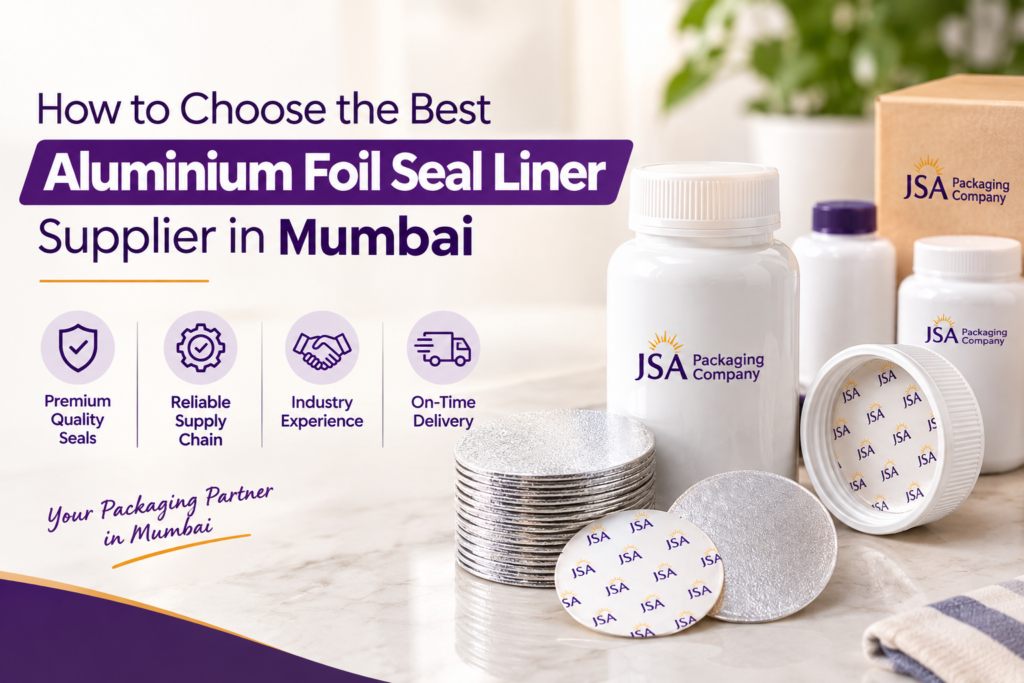
Choosing the right sealing material may seem like a small part of the packaging process, but it can directly affect product protection, shelf life, leakage prevention, and customer experience. This becomes even more important when your business handles food products, pharmaceuticals, cosmetics, edible oils, chemicals, or other products that require secure packaging.
For manufacturers and packaging buyers, finding a reliable aluminium foil seal liner supplier in Mumbai is therefore more than simply comparing prices. The right supplier should understand your container, closure system, product requirements, production volume, and sealing process.
A properly selected foil seal liner can create a strong barrier between the product and the outside environment while providing tamper evidence and helping prevent leakage or contamination.
But with different liner materials, sizes, structures, and sealing requirements available in the market, how do you know which supplier is right for your business?
This guide explains the key factors you should consider before choosing an aluminium foil seal liner supplier in Mumbai.
What Is an Aluminium Foil Seal Liner?
An aluminium foil seal liner is a sealing component placed inside a bottle or container closure. It generally consists of aluminium foil combined with other sealing or backing layers depending on the application.
During induction sealing, electromagnetic energy heats the aluminium layer. The heat activates the sealing layer, which bonds with the container mouth and creates a secure seal.
The exact construction of a liner depends on factors such as:
- Container material
- Cap and neck dimensions
- Product characteristics
- Required sealing strength
- Packaging line speed
- Easy-peel or permanent sealing requirements
- Storage and transportation conditions
For this reason, choosing a liner simply because it looks suitable is not enough. The liner needs to work correctly with the complete packaging system.
Why Choosing the Right Supplier Matters
The supplier you choose can have a direct impact on your packaging operation.
A low-cost liner may appear attractive initially, but inconsistent dimensions, unsuitable material combinations, or poor sealing performance can create problems during production.
Common packaging issues can include:
- Leakage during transportation
- Incomplete sealing
- Difficult peeling
- Product contamination
- Seal failure during storage
- Increased packaging rejection
- Production downtime
- Customer complaints
A dependable supplier should therefore focus on consistent quality and application suitability rather than only offering the lowest price.
For businesses purchasing packaging components regularly, supplier reliability is especially important because every production batch needs consistent performance.
7 Factors to Consider When Choosing an Aluminium Foil Seal Liner Supplier in Mumbai
1. Check the Material Quality
Material selection is one of the first things you should discuss with a supplier.
Aluminium foil seal liners are not identical for every application. Different products may require different laminate structures, backing materials, thicknesses, or sealing layers.
Before placing a bulk order, ask the supplier:
- What material structure is being used?
- Is it suitable for your container?
- Is the sealing layer compatible with your bottle material?
- Is the liner suitable for your product?
- What thickness and diameter options are available?
The supplier should be able to explain the material rather than simply provide a product catalogue.
For food and pharmaceutical packaging, buyers should also discuss applicable quality and compliance requirements according to their specific application.
2. Make Sure the Liner Matches Your Container
One of the most common mistakes buyers make is ordering a liner without properly checking the container and cap specifications.
The liner needs to match the container opening and closure system.
For example, packaging may involve:
- HDPE bottles
- PET bottles
- PP containers
- Glass jars
- Plastic jars
- Different types of screw caps
Even when two containers look similar, their neck dimensions and sealing requirements can differ.
This is why an experienced aluminium foil seal liner supplier in Mumbai should ask for container and cap details before recommending a liner.
Providing a sample bottle, cap dimensions, neck diameter, or technical specifications can help the supplier identify a suitable solution.
3. Look for Consistent Sealing Performance
For commercial packaging, consistency is just as important as individual product quality.
A liner may perform well in one trial but create problems if subsequent batches have inconsistent dimensions or material characteristics.
When evaluating a supplier, consider whether they can maintain consistency in:
- Diameter
- Thickness
- Material structure
- Sealing layer
- Cutting quality
- Adhesion
- Overall finish
This becomes particularly important for manufacturers operating automated or high-volume packaging lines.
A reliable supply of consistent liners can help reduce unnecessary production interruptions and packaging rejection.
4. Consider Your Product and Industry
Different industries have different packaging requirements.
For example, food and beverage products may need sealing solutions that support product protection and hygiene. Pharmaceutical packaging may have more specific technical and compliance requirements. Cosmetics and chemicals may require different sealing characteristics depending on the formulation.
JSA Packaging Company provides packaging sealing solutions for industries including:
- FMCG
- Pharmaceuticals
- Edible oils
- Cosmetics
- Chemicals
- Food processing
Before selecting a liner, explain what product you are packaging and how it will be stored, transported, and used.
A supplier with experience across multiple applications can help you identify the appropriate sealing structure instead of treating every order as a standard product.
5. Ask About Induction Sealing Compatibility
If you are using an induction sealing machine, compatibility between the machine, container, cap, and liner is essential.
Induction sealing wads work as part of a complete packaging system. The sealing result depends on several factors, including the liner structure, container material, cap pressure, machine settings, sealing time, and production conditions.
A suitable supplier should understand this relationship.
Before ordering, discuss:
- Your induction sealing machine
- Container material
- Cap type
- Container diameter
- Production speed
- Required sealing strength
- Easy-open requirements
This can help reduce trial-and-error during production.
6. Check Customisation and Size Options
Packaging requirements are not always standard.
You may need a particular liner diameter, thickness, material structure, or backing. Some businesses may also require printed or customised sealing solutions.
A supplier that can support different specifications gives packaging buyers greater flexibility.
Customisation can be especially useful when you have:
- Special bottle dimensions
- Unique cap designs
- Different container materials
- Specific product requirements
- High-volume production
- Brand-specific packaging requirements
Instead of selecting a generic liner and adjusting your packaging around it, discuss your actual requirements with the supplier first.
7. Evaluate Bulk Supply Capability
For manufacturers, buying a few samples is very different from maintaining a regular supply.
If your monthly requirement is high, the supplier should have the production capability and planning process to handle repeat orders.
This is particularly important when purchasing wholesale induction cap liners for large-scale packaging operations.
Ask potential suppliers about:
- Minimum order quantities
- Production capacity
- Lead time
- Bulk pricing
- Packaging of finished liners
- Repeat-order consistency
- Delivery schedules
A supplier who can support your business as your requirements grow can become a long-term packaging partner rather than simply another vendor.
Aluminium Foil Seal Liners for Different Packaging Applications
The right liner depends heavily on the packaging application.
Induction Wads for HDPE Jars
HDPE is widely used for bottles and jars across several industries. When using induction wads for HDPE jars, the sealing material must be compatible with the HDPE container and the selected cap.
The correct liner can help create a secure seal while supporting protection against leakage and external contamination.
However, the final sealing result also depends on machine settings and the overall container-closure system.
Food and FMCG Packaging
Food packaging requires careful consideration of product protection and sealing performance.
A suitable aluminium foil seal liner can provide an additional barrier beneath the cap and help protect packaged products during storage and transportation.
For food-related applications, buyers should discuss the required material and applicable food-contact requirements with their supplier before ordering.
Pharmaceutical Packaging
Pharmaceutical packaging often requires a more controlled approach to material selection and sealing.
Factors such as product compatibility, seal integrity, packaging specifications, and applicable quality requirements should be considered before selecting the liner.
For pharmaceutical manufacturers, supplier consistency becomes particularly important because packaging quality is closely connected with product protection.
Cosmetic and Chemical Packaging
Cosmetics, chemicals, oils, and similar products can have different formulation and packaging characteristics.
A liner that works well for one product may not necessarily be suitable for another.
The supplier should therefore consider the product, container material, closure, and sealing process before recommending the appropriate structure.
Aluminium Foil Seal Liner Supplier vs. Generic Packaging Trader
Price is important, but it should not be the only deciding factor.
A packaging trader may simply supply an available product, whereas a manufacturer or technically experienced supplier may be able to discuss material structure, dimensions, application requirements, and production consistency.
When comparing suppliers, consider the complete value you receive.
Look at:
Product quality + technical support + consistency + supply capability + application suitability
rather than comparing only the price per piece.
A slightly cheaper liner that creates production problems can ultimately cost more through wastage, rejected products, machine stoppages, and customer complaints.
Questions to Ask Before Placing Your First Order
Before finalising your supplier, ask these practical questions:
- Is the liner compatible with my bottle and cap material?
- What liner structure is recommended for my product?
- What diameters and thicknesses are available?
- Can I receive samples before placing a bulk order?
- Is the liner suitable for induction sealing?
- Can you support wholesale requirements?
- What is the expected lead time?
- Can you maintain the same specifications for repeat orders?
- Are customised sizes or structures available?
- What quality checks are performed before dispatch?
A supplier who can answer these questions clearly is more likely to understand the actual needs of your packaging operation.
Why Choose JSA Packaging Company?
At JSA Packaging Company, we understand that packaging sealing is not just about placing a liner inside a cap. The right sealing solution needs to work with the complete packaging system.
We manufacture high-quality induction sealing wads, liners, and packaging sealing solutions designed to help protect products from leakage, contamination, and tampering.
Our solutions are used across industries such as FMCG, pharmaceuticals, edible oils, cosmetics, chemicals, and food processing.
Whether you require standard sealing solutions or need to discuss a particular bottle, jar, cap, or production requirement, our team can help you identify a suitable option.
For businesses looking for an aluminium foil seal liner supplier in Mumbai, the focus should be on dependable quality, application compatibility, consistent supply, and responsive support.
That is the approach we follow at JSA Packaging Company.
Frequently Asked Questions
What is an aluminium foil seal liner used for?
An aluminium foil seal liner is used to create a secure seal between a container and its closure. It can help reduce leakage and protect packaged products from contamination and tampering.
Can aluminium foil seal liners be used with HDPE jars?
Yes, suitable liners can be designed for HDPE containers. However, the liner structure and sealing conditions should be matched with the specific HDPE container, cap, and induction sealing process.
What are induction sealing wads?
Induction sealing wads are liners designed to create a seal on containers using induction heating. They are commonly used with packaging made from materials such as HDPE, PET, PP, and glass, depending on the liner construction.
How do I choose the right liner size?
The liner size should correspond to the container neck and cap dimensions. Providing the supplier with your bottle, cap, neck diameter, or technical drawing can help determine the appropriate size.
Can I buy wholesale induction cap liners?
Yes. Businesses with regular or high-volume packaging requirements can discuss wholesale induction cap liners with manufacturers and suppliers to determine suitable quantities, specifications, and supply schedules.
Are aluminium foil seal liners suitable for food packaging?
Suitable food-packaging liners can be used for food applications, but the exact material and applicable food-contact requirements should be confirmed based on the product and intended use.
What should I check before selecting an aluminium foil seal liner supplier in Mumbai?
Check material quality, container compatibility, sealing performance, customisation options, production capacity, quality consistency, lead time, and the supplier’s ability to support your required volume.
Final Words
Choosing the right aluminium foil seal liner supplier in Mumbai is an important decision for any business that depends on secure and consistent packaging. The lowest price should not automatically determine your choice. Material quality, container compatibility, sealing performance, consistency, technical support, and reliable bulk supply all deserve equal attention.
Whether you need induction sealing wads, induction wads for HDPE jars, or wholesale induction cap liners, working with a supplier that understands your packaging requirements can make the purchasing process much easier.
JSA Packaging Company focuses on reliable sealing solutions for different industries and packaging applications. If you are looking for quality sealing products and want to discuss your specific requirement, get in touch with our team today.
JSA Packaging Company is the best option for you.